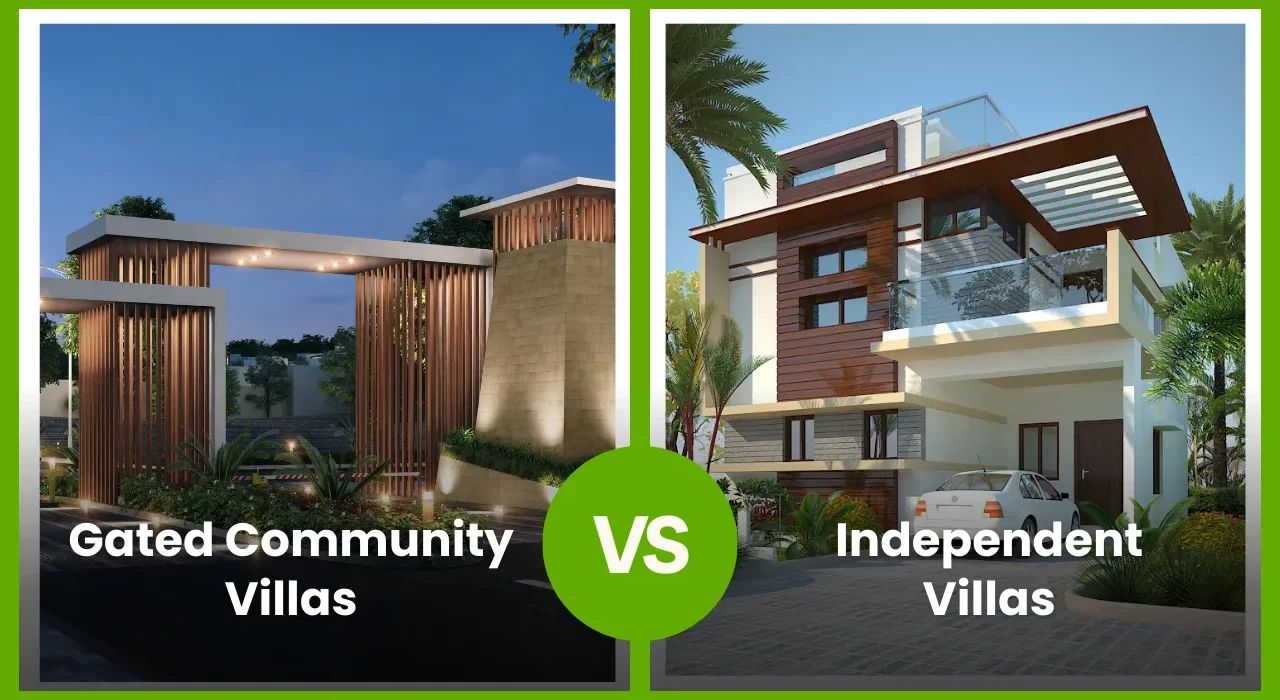
Gated Community Villas vs Independent Villas
CategoriesReal Estate

Gated Community Villas vs Independent Villas: What to Choose?

When it comes to choosing a luxury villa, the decision is more than just about the square footage or number of bedrooms. It’s about lifestyle, privacy, investment potential, and long-term happiness. If you’re torn between Gated Community Villas vs Independent Villas, you’re not alone. Many people face this dilemma, as each offers a unique set of advantages and challenges.

This article will explore the top 10 differences between Gated Community Villas vs Independent Villas, pros, and cons of both options. By the end, you’ll have all the information you need to make a well-informed choice based on your personal preferences, budget, and long-term goals.

Definition and Overview: Gated Community Villas vs Independent Villas

Before diving into the specifics, let’s break down the basic concepts of Gated Community Villas and Independent Villas.

What is a Gated Community Villa?

Gated Community Villas are private residential units that are part of a larger, secured, and often well-planned housing development. These communities are enclosed with gates or walls and usually feature controlled access points, ensuring a safe and peaceful living environment for residents. Along with security, these developments often provide shared amenities like parks, gyms, pools, and clubhouses.

Key Features of Gated Community Villas

  • 24/7 Security: Security personnel, CCTV monitoring, and controlled access gates ensure high-level safety.
  • Shared Amenities: Common facilities like a gym, pool, playground, and clubhouse are available.
  • Maintenance Services: Regular upkeep of common areas, lawns, waste disposal, and utilities.
  • Community Living: Social spaces and planned neighborhood events create a sense of community.
  • Uniform Design: Homes in these developments often follow a similar architectural style.

Pros of Gated Community Villas

  • Security and Peace of Mind: Manned gates, surveillance systems, and restricted access create a safe environment, making gated communities perfect for families and those concerned about security.
  • Convenience: With everything from cleaning services to maintenance and amenities at your disposal, you’re not bogged down by daily chores.
  • Social Interaction: These communities foster a sense of belonging with regular events and communal spaces where neighbors can meet and interact.
  • Higher Resale Value: The structured, safe, and well-maintained environment often leads to better resale value and attracts a more affluent demographic.
  • Amenities at Your Doorstep: You’ll have access to everything from a gym to kids’ play areas, all within walking distance.

Cons of Gated Community Villas

  • HOA Fees: You’ll need to pay monthly or quarterly maintenance fees that cover the upkeep of the community and its amenities, which can add up over time.
  • Lack of Freedom in Customization: The architectural design and layout are often predetermined, meaning you can’t change much without approval.
  • Shared Space: Whether it’s a pool, a garden, or even driveways, you’ll share common areas with your neighbors, which could reduce privacy.
  • Strict Rules and Regulations: Gated communities often have specific guidelines for things like parking, pets, noise, and home modifications, limiting your freedom.
  • Overcrowded Amenities: Since everyone shares the same facilities, amenities like the pool or gym can get overcrowded, especially during peak hours.

What is an Independent Villa?

An Independent Villa is a standalone residential property that sits on a plot of land which is completely owned by the homeowner. These villas offer privacy, freedom, and the ability to design the space as you see fit. Unlike gated communities, independent villas are usually not part of a planned development, so you don’t have to share spaces or amenities with anyone.

Living in an independent villa means full autonomy over your property, but it also comes with the responsibility of managing everything yourself.

Key Features of Independent Villas

  • Complete Ownership: You own both the villa and the land it stands on.
  • Customization Freedom: Full control over architectural design, layout, and interiors.
  • No Shared Amenities: You won’t have access to community pools, gyms, or parks unless you build them.
  • Self-Maintenance: You manage all upkeep and repairs on your own or hire services independently.
  • Privacy: No shared walls or communal spaces, offering more seclusion.

Pros of Independent Villas

  • Total Privacy: You don’t share walls, gardens, or driveways with anyone, which means absolute peace and seclusion.
  • Freedom to Customize: Want a larger garden, a private pool, or a rooftop terrace? You can do that without any restrictions.
  • Full Control: You are in charge of every aspect of the property, from design to maintenance.
  • Land Ownership: You not only own the villa but also the land beneath it, which often increases in value over time.
  • Personalized Amenities: You can build whatever amenities you like, whether that’s a home theater or a personal gym.

Cons of Independent Villas

  • Security Risks: Independent villas do not come with the built-in security of gated communities. It’s up to you to invest in security systems or hire security personnel.
  • High Maintenance Costs: You’re responsible for every aspect of upkeep, which can be time-consuming and costly. This includes lawn care, plumbing, repairs, and more.
  • Lack of Community Support: You won’t have the built-in social opportunities that come with living in a gated community. It can feel more isolated, especially in suburban areas.
  • No Shared Amenities: Unlike gated communities, you’ll have to build your own facilities, which could be expensive and time-consuming.
  • Resale Challenges: Independent villas can be harder to sell, especially if the location isn’t prime or lacks the amenities of a gated development.

Top 10 Differences Between Gated Community Villas vs Independent Villas

Now, let’s look at the top 10 key differences between Gated Community Villas vs Independent Villas, broken down in detail:

Security

In Gated Community Villas, security is built-in. The development typically features 24/7 manned gates, CCTV surveillance, and other security features, ensuring the safety of residents. It’s a huge benefit for families or anyone seeking peace of mind. However, Independent Villas require homeowners to take matters into their own hands. You need to invest in security systems like cameras, alarms, and possibly private guards, which can become costly and require more effort.

Maintenance

Gated communities provide centralized maintenance services managed by the homeowners’ association (HOA). This includes landscaping, repairs, and upkeep of communal spaces. For Independent Villas, all maintenance tasks — including lawn care, plumbing, and electrical issues — fall on the homeowner, often leading to higher costs and time spent organizing services. If you prefer a hands-off, worry-free lifestyle, gated communities are better suited for you.

Privacy

Privacy in Independent Villas is a huge draw. You own the land and the villa, and there are no shared walls or communal spaces. Gated Community Villas, on the other hand, may involve sharing common areas like gardens, streets, and recreational facilities with neighbors. Although security is better, your privacy can be limited by proximity to others and shared spaces.

Amenities

Gated Community Villas offer a range of shared amenities, such as gyms, swimming pools, playgrounds, and clubhouses. These amenities are maintained by the HOA and can be accessed by all residents. In Independent Villas, you don’t have these conveniences unless you build them yourself. While this gives you complete control over your amenities, it also means higher upfront costs and the responsibility of maintenance.

Cost Structure

When buying a Gated Community Villa, the cost is often higher upfront, and there are recurring HOA fees that cover maintenance and amenities. These fees can add up over time. With Independent Villas, the cost structure is more variable. While the initial cost can be higher due to land ownership, ongoing expenses are mostly limited to property taxes, utilities, and personal maintenance. The lack of HOA fees might be appealing for those who prefer to control their budget.

Customization

Independent Villas provide complete freedom to modify and personalize the property. Whether you want to extend your villa, change the exterior, or redesign the interiors, you can do so without restrictions. Gated Community Villas, however, typically have a uniform design and strict regulations regarding alterations. While you may not have the same creative freedom, the uniformity ensures that the overall aesthetic of the neighborhood remains consistent.

Community Life

Gated communities naturally encourage community engagement. They often organize social events, festivals, and activities, providing residents with opportunities to interact. Independent Villas, on the other hand, offer less interaction with neighbors. While this may suit introverts and those seeking solitude, it can lead to a sense of isolation for others who enjoy socializing and community events.

Investment Appeal

Gated Community Villas tend to hold their value well and attract buyers looking for security and convenience, leading to higher resale and rental potential. The presence of amenities and security adds to their marketability. Independent Villas, while potentially appreciating in value due to land ownership, can be more difficult to sell, especially in areas without high demand.

Location

Gated communities are often located closer to city centers or growing suburbs, making them more accessible to amenities like shopping, schools, and offices. Independent Villas, however, are typically situated in quieter, more suburban or rural locations. While this offers peace and tranquility, it might mean longer commutes and fewer amenities nearby.

Legal & Administrative Support

When purchasing a Gated Community Villa, you benefit from the legal and administrative services provided by the builder or HOA. This can simplify the paperwork and ensure that all regulations are followed. With Independent Villas, you are responsible for handling all legal and administrative tasks, including verifying the land title, zoning permissions, and property taxes. This requires more involvement but gives you greater control.

What to Choose: Gated Community Villas or Independent Villas?

Choosing between Gated Community Villas and Independent Villas depends on your personal preferences and lifestyle.

Who Should Choose a Gated Community Villa?

  • Young Families: The added security, convenience, and community environment make gated communities ideal for families.
  • Busy Professionals: The reduced maintenance and nearby amenities free up valuable time for work or leisure.
  • Retirees: With controlled security and a sense of community, retirees can enjoy a peaceful, low-maintenance life.
  • People Who Prioritize Convenience: Gated communities offer easy access to amenities like gyms, parks, and stores without leaving the premises.

Who Should Choose an Independent Villa?

  • Large Families: If you need space, independence, and the ability to create your own living environment, an independent villa is perfect.
  • Creative Homeowners: People who love to design their homes according to their vision should opt for independent villas.
  • Privacy Seekers: If you crave peace and solitude, independent villas give you the ultimate privacy.
  • Long-Term Investors: Independent villas on prime plots of land can appreciate significantly over time, making them great for investors.

Gated Community Villas vs Independent Villas: Which One is Right for You?

Choosing between Gated Community Villas and Independent Villas depends on your personal preferences and lifestyle. Gated communities offer safety, social interaction, and convenience, making them perfect for those who enjoy a hassle-free, connected lifestyle. With security, shared amenities, and a strong sense of community, they often provide peace of mind and comfort. On the other hand, Independent Villas offer privacy, freedom, and customization, ideal for those who seek solitude and want full control over their property.

While we believe Gated Community Villas are an excellent choice for those prioritizing security and convenience, we understand that everyone’s needs are unique. Ultimately, both options have their merits — it’s about what aligns best with your goals, lifestyle, and budget. The right choice is yours to make.

Conclusion

The decision of Gated Community Villas vs Independent Villas ultimately comes down to your lifestyle and preferences. If you value security, community, and convenience, gated community villas are an excellent choice. For those who prioritize privacy and freedom, independent villas offer more flexibility.

For an upscale living experience, consider Peninsula Infra’s luxury gated community villas in Bangalore. With premium amenities, security, and elegance, these villas are a perfect blend of comfort and luxury. Contact us today to explore your dream home and make it a reality!

FAQs

A gated community villa refers to individual homes within a secured and controlled environment, where each villa is part of a larger community that shares common amenities. A gated community, on the other hand, is the entire development with several villas or properties, along with communal facilities like parks, gyms, and security measures, creating a well-organized living space for its residents.

The decision depends on personal preferences and lifestyle. Gated Community Villas are ideal for those seeking security, convenience, and shared amenities with a sense of community. Independent houses, however, provide greater privacy, freedom for customization, and full control over the property. If you prioritize community living and maintenance-free convenience, gated villas may be the better choice, while independent houses offer more solitude and independence.

Private Gated Community Villas provide enhanced security, access to premium amenities like gyms, pools, and parks, and a structured, well-maintained living environment. Residents benefit from 24/7 surveillance and professional property management, ensuring peace of mind. These communities often have strict rules that maintain property values and an exclusive, safe atmosphere, making them an attractive choice for families and individuals looking for a premium living experience.

Luxury homes in gated communities are often a better investment due to their exclusivity, high demand, and consistent property value appreciation. These communities offer desirable security features, upscale amenities, and a well-maintained environment, making them attractive to affluent buyers. The high standard of living in gated developments also increases the resale value. The restricted access and quality of life ensure they are a long-term investment worth considering.

Gated communities typically offer a variety of security features including 24/7 guarded entrances, CCTV surveillance, controlled access points, and security patrols to ensure the safety of residents. Some also provide alarm systems for individual villas, gated access for pedestrians and vehicles, and even fencing around the perimeter. These measures collectively work to create a secure environment, protecting against theft, break-ins, and other potential threats.


CategoriesReal Estate

15 Powerful Reasons Why Real Estate Investment is the Smartest Choice

Building wealth requires smart investment decisions. With countless options like stocks, bonds, and cryptocurrencies, picking the right one can be challenging. However, one investment stands the test of time: real estate.

Unlike stocks or cryptocurrencies, Real Estate Investment gives you a tangible asset that holds real-world value. It provides multiple income streams, tax benefits, and long-term appreciation, making it a top choice for new and experienced investors alike. In this article, we’ll explore 15 solid reasons why Real Estate Investment stands out as the ultimate investment option.

15 Strong Reasons Why Real Estate Investment Outshines Other Investments

Let’s explore the top 15 Powerful Reasons Why Real Estate Investment is the Smartest Choice:

Tangible Asset with Inherent Value

One of the biggest advantages of Real Estate Investment is that it is a physical, tangible asset. Unlike stocks or cryptocurrencies, which exist in the digital realm, real estate properties have intrinsic value. The land and buildings hold worth, regardless of market fluctuations, providing a sense of security that many investors appreciate.

Consistent Cash Flow

Real estate investment, particularly rental properties, provides a steady stream of income. Tenants pay rent each month, offering investors a predictable cash flow. Unlike stocks, where dividends are often uncertain, real estate generates reliable income, making it an excellent choice for passive investors.

Appreciation Over Time

Historically, real estate appreciates in value over time. While there may be short-term market fluctuations, property values tend to rise in the long run. This means that by holding onto real estate for several years, investors can benefit from significant capital gains.

Hedge Against Inflation

Real Estate Investment acts as a natural hedge against inflation. As inflation rises, so do property values and rental prices. This ensures that real estate investors maintain their purchasing power and continue to see their investment grow, even when the economy is uncertain.

Leverage to Maximize Returns

One unique advantage of real estate is leverage. Investors can purchase properties using borrowed money (mortgages), allowing them to control a high-value asset with a relatively small down payment. This amplifies returns and enables wealth accumulation at a faster rate compared to other investments.

Tax Advantages and Deductions

Real estate investors enjoy numerous tax benefits, including:

  • Depreciation deductions

  • Mortgage interest write-offs

  • Property tax deductions

  • Business expenses related to property management

These tax incentives help reduce overall taxable income, allowing investors to keep more of their profits.

Diversification for a Balanced Portfolio

Real estate provides an excellent way to diversify an investment portfolio. Unlike stocks and bonds, which can be volatile, real estate tends to have a lower correlation with the stock market. This means that during market downturns, real estate investments can provide stability and balance.

Multiple Investment Strategies

There is no one-size-fits-all approach to real estate investing. Different strategies include:

  • Buy-and-hold (long-term rentals)

  • Fix-and-flip (buying distressed properties, renovating, and selling for a profit)

  • Short-term rentals (vacation rentals via Airbnb)

  • Real Estate Investment Trusts (REITs) (investing in real estate without owning property)

These diverse options allow investors to choose an approach that fits their financial goals.

Ability to Generate Passive Income

Many investors turn to real estate for its ability to generate passive income. Once a rental property is acquired and managed efficiently, it can provide continuous earnings with minimal effort, helping investors achieve financial freedom.

Control Over Your Investment

Unlike stocks or mutual funds, where investors have little to no control, real estate offers direct influence over an asset’s performance. Owners can renovate, increase rent, or implement better management strategies to enhance property value and profitability.

Demand for Housing is Always There

Regardless of economic conditions, people need places to live. Housing demand remains strong, making real estate a recession-resistant investment. Unlike certain industries that may decline over time, real estate is a necessity that will always be in demand.

Real Estate is Less Volatile Than Stocks

Stock markets can be highly unpredictable, with prices fluctuating daily based on market sentiment, economic conditions, and corporate performance. Real estate, however, tends to be much more stable, providing long-term appreciation without extreme volatility.

Ability to Use It for Personal Use

One unique benefit of real estate is that investors can use their properties in addition to generating income. Whether it’s a vacation home, a rental property that can be lived in later, or a home office space, real estate offers utility beyond investment returns.

Forced Appreciation Through Renovation

Unlike stocks, where investors rely on market performance, real estate allows for forced appreciation—increasing a property’s value through renovations and upgrades. Common improvements that boost value include:

  • Kitchen and bathroom remodels

  • Energy-efficient upgrades

  • Adding extra bedrooms or bathrooms

  • Landscaping and curb appeal enhancements

These improvements not only make the property more attractive to tenants or buyers but also increase equity.

Real Estate Can Be Passed Down Generations

One of the greatest advantages of real estate is its ability to create generational wealth. Properties can be inherited by future generations, providing financial security for years to come. Many families have built lasting wealth through real estate investments passed down over time.

Conclusion

Real Estate Investment is a time-tested method for building wealth, generating passive income, and protecting against economic downturns. With multiple tax benefits, leverage opportunities, and the ability to control your investment, real estate stands out as one of the best ways to secure financial freedom.


If you’re looking for a solid investment, explore Peninsula Infra Luxury Villas. These premium properties offer high appreciation potential, steady rental income, and a luxurious lifestyle. Real estate remains a smart way to build wealth and secure your financial future.

FAQs

1. Is real estate better than stocks for beginners?

Both real estate and stocks have their advantages, but real estate is often better for beginners due to its tangible nature, passive income potential, and stability compared to stock market volatility.

2. How much money do I need to start investing in real estate?

The amount varies, but you can start with as little as a 3-5% down payment through loans like FHA. REITs also allow investment in real estate with minimal capital.

3. What are the risks involved in real estate investing?

Some risks include market fluctuations, tenant issues, property maintenance costs, and financing challenges. However, proper research and strategy can mitigate most of these risks.

4. Can I invest in real estate without buying property?

Yes! REITs, real estate crowdfunding, and real estate ETFs allow you to invest in the market without owning physical property.

5. What is the best type of real estate investment for beginners?

Rental properties and REITs are great starting points. Rental properties generate passive income, while REITs offer exposure to real estate without direct management responsibilities.

CategoriesReal Estate Passive Income

How to Make Passive Income from a Villa

Owning a villa isn’t just about luxury—it’s about making your money work for you. Imagine waking up in your dream home, knowing that it’s generating income while you sip your morning coffee. That’s the beauty of passive income from a villa. If you already own one or are thinking about investing in one, why not make it pay for itself?

This guide is all about turning your villa into a cash-flowing asset. Whether you want to rent it out for vacations, lease it long-term, or even host high-end events, I’ll walk you through the best ways to make passive income from a villa with minimal effort.

Let’s dive in.

Why Villas Are Perfect for Passive Income

Villas are premium properties, and that gives you an edge. Here’s why they’re a solid source of passive income:

  • High Demand: Luxury travelers, remote workers, and event planners are always looking for premium spaces.
  • Multiple Income Streams: Unlike standard apartments, a villa can be rented short-term, leased long-term, or even used for events.
  • Luxury Pricing Power: Villas command high rental rates, meaning fewer tenants or guests can still bring in serious cash.
  • Appreciating Asset: Not only does a villa make money, but it also grows in value over time.

Now, let’s break down the smartest ways to generate passive income from a villa.

Top 10 Best Ways to Earn Passive Income from a Villa in India

Let’s explore the Top 10 Best Ways to Earn Passive Income from a Villa in India:

Short-Term Vacation Rentals on Airbnb and MakeMyTrip

One of the most profitable ways to generate passive income from a villa is by renting it out on short-term rental platforms like Airbnb, MakeMyTrip, and Booking.com. Tourists prefer private villas over hotels for their space, privacy, and home-like experience.

How to Maximize Earnings from Short-Term Rentals:

  • List on Multiple Platforms: Get maximum bookings by listing on Airbnb, MakeMyTrip, and Yatra.
  • Offer Local Experiences: Provide cultural experiences like yoga, cooking classes, or guided tours to attract tourists.
  • Seasonal Pricing Strategy: Charge higher during peak seasons like Diwali, Christmas, and summer vacations.
  • Provide Premium Amenities: Fast Wi-Fi, smart TVs, private pools, and power backup can help you charge more.

A well-maintained villa in a tourist destination like Goa or Manali can easily fetch ₹5,000 to ₹25,000 per night.

Long-Term Leasing for Consistent Monthly Income

If you prefer a steady and hassle-free income, long-term rentals can be a great option. Instead of dealing with multiple short-term guests, lease your villa to professionals, NRIs, or expatriates who need long-term housing.

Advantages of Long-Term Leasing:

  • Fixed Monthly Income: Earn anywhere from ₹40,000 to ₹3,00,000 per month, depending on location.
  • Less Maintenance Hassle: No need for frequent cleaning and guest check-ins.
  • Ideal for Metro Cities: Villas in Mumbai, Delhi, or Bangalore can attract high-paying tenants.

This option is great for those who want a hands-off passive income from a villa.

Hosting Weddings and Luxury Events

With the rise of destination weddings and intimate luxury events in India, renting out a villa for weddings, corporate retreats, and private parties can be highly profitable.

How to Earn from Event Hosting:

  • Tie Up with Event Planners: Wedding and corporate event organizers can bring high-end clients.
  • Charge Per Event: Luxury villa wedding venues can earn anywhere from ₹2,00,000 to ₹10,00,000 per event.
  • Provide Catering and Decor Services: Offering add-ons can boost your earnings significantly.

Locations like Jaipur, Udaipur, and Goa are hotspots for destination weddings, making this an excellent opportunity for villa owners.

Co-Living Spaces for Working Professionals and NRIs

The concept of co-living spaces is growing rapidly in India, especially in cities like Bangalore, Hyderabad, and Pune. If your villa has multiple rooms, renting them out as shared living spaces can be a lucrative option.

Why Co-Living is a Great Option?

  • Steady Income: Monthly rent per person can be ₹20,000 to ₹50,000, depending on the city.
  • High Demand: Startups, IT professionals, and NRIs prefer co-living spaces over traditional rentals.
  • Low Vacancy Rates: A well-managed co-living villa stays occupied year-round.

Offering fully furnished rooms with Wi-Fi and food services can make your villa a preferred choice for renters.

Fractional Ownership and Timeshare Model

If you don’t want to manage the villa yourself, consider fractional ownership or timeshare models. This allows multiple investors to own shares of the villa and use it for a specific number of days per year.

How Does This Work?

  • Sell Shares of Your Villa: Investors buy ownership in return for specific usage rights.
  • Guaranteed Returns: You get a fixed income from co-owners.
  • Shared Maintenance Costs: Expenses are divided among multiple owners.

This model is popular in Goa and Himachal, where vacation homes are in high demand.

Leasing to Corporate Clients for Business Retreats

Many corporate companies rent out luxury villas for senior executives, training programs, and off-site retreats. Instead of dealing with individual guests, leasing your villa to MNCs and startups can provide a stable passive income.

How to Attract Corporate Clients?

  • List on Business Rental Platforms: Websites like NestAway and Stanza Living cater to corporate housing.
  • Offer Office Amenities: High-speed internet, meeting rooms, and work desks make your villa business-friendly.
  • Secure Long-Term Contracts: Corporates often sign 6 to 12-month leases, ensuring steady income.

A well-furnished villa in Mumbai, Gurgaon, or Bangalore can fetch ₹1,00,000+ per month from corporate tenants.

Renting Villa Space for Photoshoots and Film Shoots

Bollywood, Tollywood, and social media influencers rent villas for shoots, making this a unique income opportunity.

How to Earn from Photoshoots & Films?

  • List Your Villa on Location Websites: Platforms like Peerspace help connect with production houses.
  • Charge Per Day or Hour: Daily rentals for films, music videos, and ads range from ₹50,000 to ₹5,00,000 per day.
  • Highlight Unique Features: Villas with scenic views, heritage architecture, or luxury interiors are in high demand.

If your villa is in Mumbai, Goa, or Kerala, film production companies could be your best clients.

Offering Yoga and Wellness Retreats

India is a hub for wellness tourism, and many travelers look for spiritual retreats and yoga stays. If your villa is in a peaceful location like Rishikesh, Kerala, or Coorg, this is a great business idea.

How to Start a Wellness Retreat?

  • Partner with Yoga Instructors: Collaborate with wellness experts to host retreats.
  • Charge Per Participant: Guests typically pay ₹25,000 to ₹1,00,000 per week for premium wellness stays.
  • Include Ayurvedic Treatments: Offering spa and organic food can increase your profits.

Wellness retreats can generate high seasonal income with minimal operational costs.

Turning Your Villa into a Boutique Homestay

A boutique homestay is a hybrid between a hotel and a homely stay. Platforms like StayVista and SaffronStays help villa owners attract high-paying guests.

Why Choose Boutique Homestays?

  • Premium Pricing: Guests pay ₹5,000 to ₹30,000 per night for private stays.
  • Flexible Rental Periods: Choose between daily, weekly, or monthly bookings.
  • Ideal for Heritage Villas: Traditional homes in Rajasthan, Kerala, and Pondicherry are in high demand.

Providing personalized services like home-cooked meals and guided tours can make your villa stand out.

Selling Advertising Space on Your Villa Property

If your villa is in a high-traffic area, businesses may pay for advertising space on walls, rooftops, or gardens.

Ways to Monetize Advertising Space:

  • Billboard Rentals: Rent space for ₹10,000 to ₹1,00,000 per month.
  • Influencer Collaborations: Let brands use your villa for promotional content.
  • Event Sponsorships: Local businesses can sponsor villa events in exchange for branding.

This is a zero-maintenance passive income opportunity, especially for villas near highways or city centers.

Turn Your Villa into a Profitable Asset

We’ve covered a detailed guide on how to generate passive income from a villa, exploring everything from short-term rentals and long-term leases to luxury event hosting and fractional ownership. The opportunities are endless—your villa can be more than just a getaway; it can be a powerful income-generating asset.

However, if you want a truly effortless investment, Peninsula Infra’s ParkElite Villas is the best option. With fully managed luxury properties, guaranteed rental income, and strong capital appreciation, this is a smart, stress-free way to earn consistent passive income from real estate.

Why let your dream villa sit idle when it could be making money for you? Contact us and start your journey today and turn your villa into a wealth-building asset with ParkElite Villas.

FAQs About Passive Income from a Villa in India

Here are some commonly asked questions about making passive income from a villa in India:

How much rental income can I earn from a villa in India?

Rental income depends on the location. In cities like Mumbai and Bengaluru, luxury villas can fetch ₹65,000 to ₹2.38 lakh per month, while in smaller cities, it may range from ₹30,000 to ₹70,000 per month.

Is rental income from a villa stable?

Yes, especially in prime locations. Luxury micro-markets in Delhi, Mumbai, and Bengaluru have seen rental growth of up to 18% in recent years, making villa investments highly profitable​.

What are the tax benefits of earning rental income from a villa?

You can deduct property tax, maintenance costs, home loan interest, and depreciation, reducing your taxable income. Investing in a rental villa can also offer long-term capital appreciation​

How can I maximize passive income from my villa?

You can increase income by renting to corporate tenants, offering short-term rentals (Airbnb), adding luxury amenities, and targeting serviced apartment models, which offer 8-10% ROI annually​

Should I invest in a serviced villa for passive income?

Serviced villas offer a hands-free investment, with operators managing tenants and maintenance. Returns start at 8-10% annually and can grow to 15% over time, making them a hassle-free passive income source​

CategoriesReal Estate

Top 12 Surprising Differences Between Villa vs Apartment

Deciding between a villa vs apartment is a big choice when buying a home. Do you want a spacious, private house with a garden? Or do you prefer a modern apartment with security and shared facilities? Each has its own advantages and suits different lifestyles.

A villa vs apartment comparison mainly comes down to space, cost, and convenience. Villas offer privacy, freedom, and luxury, while apartments provide affordability, low maintenance, and easy access to city life.

In this guide, we’ll explain the key differences between villa vs apartment so you can decide which one is the best fit for you. Let’s get started!

Definition and Overview: Villa vs Apartment

Choosing between a villa and an apartment is a crucial decision that depends on factors such as lifestyle, budget, and long-term goals. Villas offer privacy, luxury, and space, whereas apartments provide affordability, convenience, and a strong sense of community. Understanding their differences can help you make an informed choice.

What is a Villa?

A villa is a standalone, single-family home built on its own land, typically featuring private outdoor spaces such as gardens, terraces, and sometimes even swimming pools. Villas are known for their spacious interiors, exclusivity, and the ability to modify the property according to personal preferences.

Key Features of Villas

  • Standalone houses with independent entrances.
  • Often located in suburban or gated communities.
  • Private outdoor spaces, such as gardens, terraces, and patios.
  • Freedom to customize and modify the structure.
  • Typically larger in size compared to apartments.
  • More luxurious features, including private parking and swimming pools.

Common Types of Villas

  • Independent Villas: Completely detached houses offering full privacy.
  • Twin Villas: Two houses sharing a common wall but offering separate entrances.
  • Row Villas: Multiple villas built in a row with shared walls, yet maintaining a sense of exclusivity.
  • Luxury Villas: High-end properties with premium features such as private pools, landscaped gardens, and smart home technologies.

Pros of Villas

  • Privacy and Independence: No shared walls, ensuring complete privacy.
  • Customization: Freedom to design, expand, and renovate the house.
  • Spacious Living: Large interiors and outdoor areas, ideal for families.
  • Better Resale Value: Land value appreciates significantly over time.
  • Peaceful Living: Located in less crowded and noise-free environments.

Cons of Villas

  • High Cost: More expensive to buy and maintain than apartments.
  • Self-Maintenance: Requires independent upkeep, including security and landscaping.
  • Distance from City Centers: Often located in suburban areas, making daily commutes longer.
  • Security Concerns: Unlike apartments, security is not centralized and needs to be arranged independently.

What is an Apartment?

An apartment is a self-contained housing unit within a larger building, designed for communal living. Apartments provide modern conveniences, shared amenities, and security, making them a preferred choice in urban areas where land availability is limited.

Key Features of Apartments

  • Units within multi-story buildings with shared corridors and facilities.
  • Common amenities such as security, parking, gyms, and swimming pools.
  • Located in urban and suburban areas with easy access to workplaces, malls, and entertainment centers.
  • Different configurations available, including studio, duplex, and penthouse apartments.
  • Affordable compared to villas, with lower maintenance responsibilities.

Common Types of Apartments

  • Studio Apartments: Single-room units combining the bedroom, kitchen, and living space.
  • Duplex Apartments: Two-story apartments within a single complex.
  • Penthouse Apartments: Luxury units located on the top floors with premium features.
  • Serviced Apartments: Fully furnished rental apartments offering hotel-like services.

Pros of Apartments

  • Affordable: Less expensive than villas, with financing options available.
  • Low Maintenance: Shared maintenance costs managed by the apartment association.
  • Security and Safety: 24/7 security, CCTV surveillance, and gated entry.
  • Community Living: Social opportunities and networking with neighbors.
  • Convenient Location: Found in city centers, reducing commuting time.

Cons of Apartments

  • Limited Privacy: Shared walls may lead to noise disturbances.
  • Restricted Customization: Modifications are limited due to building regulations.
  • Less Space: Smaller living areas and limited outdoor space.
  • Crowded Living: More neighbors, leading to potential disruptions.

???? Explore Guide on Villa Vs House

Top 12 Differences Between Villa vs Apartment

When choosing between a villa and an apartment, it’s important to understand how they differ in various aspects such as ownership, lifestyle, space, customization, and affordability. Below is a detailed breakdown of the key differences between a villa and an apartment to help you make an informed decision.

Ownership: Villa vs Apartment

A villa is typically privately owned, meaning the buyer owns both the land and the structure built on it. Since villas are standalone houses, homeowners have full control over the property, including maintenance, renovations, and security arrangements. The value of a villa often appreciates over time due to land ownership, making it a long-term asset.

An apartment is a unit within a larger residential complex. While owners have full rights to their unit, common spaces such as hallways, lobbies, parking areas, and recreational facilities are co-owned by all residents. The apartment association or developer manages the overall maintenance and security of the building.

Structure: Villa vs Apartment

Villas are independent, single-family homes with their own private entrances, gardens, and often garages. They provide a sense of exclusivity and freedom, as there are no shared walls with neighbors. Villas are commonly built in gated communities or suburban areas with large open spaces.

Apartments are units within a multi-story residential building. They share common walls, floors, and facilities such as elevators and staircases. While modern apartments offer spacious layouts, they still provide less privacy compared to villas.

Living Style: Villa vs Apartment

Villas are designed for those who prefer a more independent and luxurious lifestyle. They provide maximum privacy, ample space, and freedom to customize the living environment. Villas are well-suited for large families or individuals who prioritize peace and quiet.

Apartments promote communal living, where residents share amenities such as swimming pools, gyms, and gardens. They are ideal for individuals, couples, or small families looking for convenience, security, and social interactions with neighbors.

Space and Size: Villa vs Apartment

Villas are much larger in terms of built-up area, with multiple floors, large rooms, private gardens, backyards, and even swimming pools. They are ideal for those who require more space for family members, pets, and recreational activities.

Apartments are typically smaller in size compared to villas. Space is limited, especially in studio or one-bedroom apartments. While luxury apartments may offer larger layouts, they still do not provide the same level of spaciousness as villas.

Customization Options: Villa vs Apartment

Homeowners have complete freedom to modify, expand, or renovate their villa as they wish. This includes building additional rooms, redesigning interiors, landscaping gardens, and installing new facilities like swimming pools or home automation systems.

Customization in apartments is restricted due to shared walls and building regulations. Structural changes are usually not allowed, and even interior modifications require approval from the apartment association. Owners can personalize interiors with decor but have limited flexibility in modifying layouts.

Maintenance Costs: Villa vs Apartment

Villas require higher maintenance costs since the owner is responsible for landscaping, plumbing, painting, and security. Additional expenses may include hiring a gardener, security guard, or housekeeping staff for upkeep.

Apartments have lower maintenance costs as services such as cleaning, security, waste management, and building repairs are collectively managed by the housing society or maintenance team. Owners pay a fixed maintenance fee, which covers these expenses.

Location Preference: Villa vs Apartment

Villas are generally located in suburban or gated communities, away from the hustle and bustle of city life. They offer a peaceful and quiet environment but may require long commutes to workplaces, schools, and commercial centers.

Apartments are primarily built in urban areas, close to offices, shopping malls, schools, and public transport. Their location provides convenience and accessibility, making them ideal for people who prefer city living.

Security and Safety: Villa vs Apartment

Villa owners are responsible for their own security arrangements, which may include CCTV cameras, security guards, or alarm systems. Gated villa communities often have 24/7 security services, but independent villas require private security measures.

Apartments offer better security as they are equipped with CCTV cameras, intercom systems, security guards, and controlled entry points. Many apartment complexes also have fire safety systems and emergency exits for added protection.

Investment Potential: Villa vs Apartment

Villas generally have higher resale value due to land appreciation. However, finding buyers may take longer, as villas are expensive and cater to a niche market. Villas also generate rental income, but the demand is lower compared to apartments.

Apartments are easier to sell and rent out due to high demand, especially in metropolitan cities. While land appreciation is limited, apartments provide better rental yields, making them a good investment option for those looking for regular income.

Community and Social Life: Villa vs Apartment

Villas provide an independent lifestyle, which means there are fewer opportunities for social interaction with neighbors. This makes them ideal for individuals who value privacy and prefer a quieter environment.

Apartments promote a strong sense of community, as residents frequently interact in shared spaces such as gardens, clubhouses, and gyms. This is beneficial for families, as children can socialize with peers, and adults can participate in community events.

Parking Facilities: Villa vs Apartment

Villas typically have private parking spaces, including garages and driveways, where homeowners can park multiple vehicles securely. Some high-end villas even offer covered carports and additional parking space for guests.

Apartments usually have designated or shared parking spaces, which can sometimes be limited based on the number of residents. In many apartment buildings, residents need to pay extra for reserved parking spots.

Price Affordability: Villa vs Apartment

Villas are significantly more expensive than apartments due to land ownership, independent maintenance, and luxury features. They require a high initial investment, and additional costs such as property taxes, security, and maintenance make them a costly option.

Apartments are more affordable and available in various budget ranges. They are ideal for first-time buyers, young professionals, and small families. Additionally, financing options like home loans make apartment ownership more accessible.

What to Choose: Villa or Apartment?

Deciding between a villa and an apartment depends on your lifestyle preferences, budget, and long-term goals. Each type of home has its own benefits, making it important to assess your needs before making a decision. Here’s a guide to help you determine which option suits you best.

Who Should Choose a Villa?

A villa is the ideal choice for those who prioritize privacy, space, and customization. It offers a luxurious living experience with more independence. You should consider buying a villa if:

  • You seek maximum privacy and space: Villas offer independent living with no shared walls or common areas.
  • You have a large family: Spacious layouts provide extra bedrooms, outdoor space, and better comfort for families.
  • You prefer the freedom to customize: Villas allow renovations, expansions, and full control over interior design.
  • You enjoy a peaceful environment: Villas are usually located in quiet, suburban, or gated communities with less noise.
  • You want a long-term investment: Land ownership increases property value, making villas a great long-term asset.

Who Should Choose an Apartment?

Apartments are better suited for individuals or families looking for convenience, affordability, and a vibrant community atmosphere. You should opt for an apartment if:

  • You want a more affordable home: Apartments are cheaper to buy and maintain compared to villas.
  • You enjoy a social lifestyle: Apartments offer shared spaces like gyms, clubhouses, and recreational areas.
  • You need easy access to urban amenities: Apartments are located near workplaces, shopping centers, and entertainment hubs.
  • You prefer low-maintenance living: Apartment complexes handle maintenance, security, and common area management.
  • You rely on public transportation: Most apartments are in well-connected areas with easy access to buses and metro stations.

Final Verdict: Which One is Right for You?

If you prioritize privacy, space, and customization, and don’t mind higher costs, a villa is the perfect choice. However, if affordability, convenience, and a sense of community matter more to you, an apartment is the way to go. Assess your lifestyle needs, financial situation, and long-term plans to make the best decision for your dream home.

Conclusion

Understanding these key differences between villas and apartments can help buyers make an informed choice that aligns with their lifestyle and financial goals. Villas provide the perfect blend of luxury, privacy, and space, making them ideal for those who desire an exclusive living experience. However, they also come with higher maintenance costs and responsibilities.

On the other hand, apartments offer affordability, security, and convenience, making them a great option for those who prefer a community-oriented and low-maintenance lifestyle. With shared amenities and prime locations, they provide a balanced and practical living solution.

Looking for affordable luxury villas in Bangalore? Reach out to Peninsula Infra today and experience the perfect combination of elegance and space.

FAQs

Here are some common questions and answers to help you understand the key differences between villa and apartment.

Which is more suitable for families, a villa or an apartment?

A villa is better for large families who prefer privacy, space, and independence. Apartments are ideal for small families or individuals who value convenience, shared amenities, and community living. The decision depends on lifestyle, budget, and the need for personal space.

Do villas offer better privacy than apartments?

Villas provide complete privacy as they are standalone homes without shared walls. Apartments have shared spaces and neighboring units, which may lead to noise and limited privacy. Villas are the best choice for those seeking exclusivity, peace, and a quiet living environment.

Which is more affordable, a villa or an apartment?

Apartments are generally more affordable because they have shared ownership, lower maintenance costs, and compact spaces. Villas are more expensive due to land ownership, larger areas, and independent upkeep, making them a premium housing option for those with a higher budget.

Are apartments easier to maintain than villas?

Yes, apartments have lower maintenance costs since shared facilities and common areas are managed by the building association. Villas require personal upkeep, including landscaping, security, and repairs, making maintenance more expensive and time-consuming compared to apartments.

Which has a better resale value, a villa or an apartment?

Villas usually appreciate more over time due to land value, making them a strong long-term investment. Apartments, while easier to rent and sell, may not appreciate as much due to shared ownership and the depreciation of building structures over time.

CategoriesVillas Luxury Villas Villas in Bangalore

Top 10 Luxury Modern Kitchen Ideas for A Villa

When you think about villa living, what comes to mind? Elegant spaces, high-end finishes, and, of course, a beautiful kitchen. The kitchen is the heart of the home, especially in a perfect villa. Modern kitchen designs go beyond just functionality—they create an atmosphere of luxury, comfort, and style that complements the villa’s overall aesthetic. In this article, we’ll explore 10 luxury modern kitchen ideas for a villa that will elevate your cooking space, making it not only visually stunning but also highly practical. Whether you’re in the process of building your dream villa or looking to renovate your current kitchen, these ideas are designed to inspire and guide you toward a contemporary kitchen that fits your lifestyle.

Top 10 Luxury Modern Kitchen Ideas for a Villa in 2025

Let’s explore the Top 10 Luxury Modern Kitchen Ideas for a Villa in 2025:

Open Concept Luxury Kitchens

Open concept layouts are a perfect choice for luxury Kitchen Ideas for a Villa, creating a spacious, airy environment. The lack of walls between the kitchen and living areas promotes fluidity, making it ideal for family gatherings and socializing, adding a modern, luxurious touch.

Specialty

  • Maximizes space and encourages flow.
  • Creates a bright, airy atmosphere.
  • Perfect for entertaining family and friends.
  • Enhances the overall villa experience.

Smart Appliances Integration

Luxury Kitchen Ideas for a Villa thrive on integrating advanced, smart appliances. Think refrigerators that track your groceries or ovens you can control remotely. These appliances make cooking and meal prep easier and more efficient, while also contributing to the villa’s sleek, modern aesthetic.

Specialty

  • Increases convenience with smart appliances.
  • Streamlines cooking and meal preparation.
  • Makes villa kitchens highly efficient.
  • Adds a touch of modern luxury.

Sleek, Handle-less Cabinets

Sleek, handle-less cabinets are a hallmark of luxury Kitchen Ideas for a Villa, offering a minimalist design. The smooth, streamlined look of these cabinets eliminates clutter, contributing to a clean, sophisticated atmosphere. Their high-end materials create a stylish and modern aesthetic for any villa kitchen.

Specialty

  • Enhances a clean, modern design.
  • Provides a minimalist, streamlined look.
  • Keeps kitchen surfaces clutter-free.
  • Adds elegance and sophistication to kitchens.

Marble and Quartz Countertops

Marble and quartz countertops are essential in luxury Kitchen Ideas for a Villa. These materials offer both beauty and durability, with unique veining and texture that add a touch of elegance. They are perfect for creating a timeless, luxurious look that complements your villa’s overall design.

Specialty

  • Timeless luxury with rich textures.
  • Durable and long-lasting surface materials.
  • Adds sophistication and style to kitchens.
  • Perfect match for luxury villa designs.

High-End Lighting Fixtures

Luxury Kitchen Ideas for a Villa always include high-end lighting. Pendant lights, chandeliers, or track lighting enhance the atmosphere, casting beautiful light across the kitchen. Not only does this improve visibility, but it also adds sophistication, making your kitchen the focal point of your villa.

Specialty

  • Creates an elegant ambiance instantly.
  • Enhances overall design with lighting.
  • Adds a luxurious, dramatic effect.
  • Illuminates kitchen spaces beautifully.

Multi-functional Kitchen Islands

A multi-functional kitchen island is a key feature in luxury Kitchen Ideas for a Villa. These islands often include built-in sinks, stoves, or storage, making them both practical and stylish. They provide extra space for cooking, dining, or socializing, combining form and function in one central feature.

Specialty

  • Provides extra counter and storage space.
  • Multi-purpose design for cooking and dining.
  • Adds functionality without sacrificing style.
  • Acts as a central kitchen feature.

Designer Backsplashes

A designer backsplash is an essential element in luxury Kitchen Ideas for a Villa. Opt for high-end materials like glass or marble tiles to create a focal point. Not only does this add beauty to your kitchen, but it also protects walls from splashes, combining elegance and practicality.

Specialty

  • Adds visual interest to the kitchen.
  • Protects walls from cooking splashes.
  • Perfect for creating kitchen focal points.
  • Combines beauty and practicality effortlessly.

Natural Elements in Design

Incorporating natural elements like wood, stone, and plants is key in luxury Kitchen Ideas for a Villa. These materials add warmth and texture, creating a welcoming, organic feel. Bringing the outdoors in helps to create a harmonious atmosphere in your kitchen while maintaining a luxurious look.

Specialty

  • Adds warmth and natural textures.
  • Brings the outdoors inside effortlessly.
  • Creates a peaceful, serene environment.
  • Enhances luxury with organic elements.

Integrated Wine Storage

Integrated wine storage is an elegant addition to luxury Kitchen Ideas for a Villa. Whether it’s a built-in wine cooler or a custom rack, it allows for easy access to your wine collection. This feature combines convenience with style, making it a perfect fit for villa kitchens.

Specialty

  • Offers easy access to wine collection.
  • Provides a sophisticated storage solution.
  • Adds luxury and convenience to kitchens.
  • Seamlessly integrates into villa kitchen design.

Customizable Storage Solutions

Customizable storage solutions are crucial in luxury Kitchen Ideas for a Villa. Options like pull-out pantries, built-in spice racks, and concealed cabinets help keep your kitchen organized while maintaining a sleek, clutter-free appearance. These solutions maximize space without sacrificing style, making your kitchen highly functional.

Specialty

  • Maximizes space while maintaining order.
  • Keeps kitchen organized and efficient.
  • Provides sleek, hidden storage options.
  • Adds style and functionality seamlessly.

Conclusion

Designing the perfect modern luxury kitchen for your villa is all about blending style, functionality, and luxury. Whether you prefer an open concept layout, high-tech appliances, or nature-inspired designs, there are endless possibilities to create a kitchen that reflects your lifestyle. By incorporating these 10 modern luxury Kitchen Ideas for a Villa, you’ll transform your villa’s kitchen into a space that’s not only beautiful but also highly practical. Embrace these design elements to craft a kitchen that enhances both the aesthetic and functionality of your home, creating a perfect balance of elegance and utility.

Ready to embrace luxury living in Bangalore? Reach out to Peninsula Infra today and discover a lifestyle of elegance and optimal space!

FAQs

What Are the Benefits of an Open Concept Kitchen in a Villa?

An open concept kitchen creates a more spacious and airy environment, promotes better flow between spaces, and is ideal for entertaining guests.

How Can Smart Appliances Improve My Kitchen Experience?

Smart appliances enhance convenience, allow you to control devices remotely, and provide real-time updates on tasks like cooking or grocery inventory.

What Are Some Budget-Friendly Alternatives for Luxury Materials?

Consider using laminate or engineered stone as alternatives to natural marble or granite for countertops. For cabinetry, look for high-quality but more affordable materials like MDF or plywood.

How Do I Choose the Right Lighting for a Modern Kitchen?

Focus on statement lighting pieces like pendant lights, chandeliers, or recessed lighting. The goal is to create a balance between functional lighting and aesthetic appeal.

Can I Mix Different Design Styles in My Villa’s Kitchen?

Yes! Mixing styles like industrial with minimalist or modern with nature-inspired elements can create a unique, personalized kitchen design that reflects your taste.

CategoriesVillas

Top 10 Essential Elements for Your Villa Interior in 2025

Designing a villa is not just about making it look good; it’s about creating an inviting, luxurious, and functional space that reflects your personality. Villas, with their expansive layouts and potential for creativity, deserve interiors that match their grandeur. So, what does it take to achieve that perfect villa interior? Let’s dive in and explore the 10 essential elements that can transform your villa into a masterpiece.

Top 10 Key Elements for a Perfect Villa Interior in 2025

Before diving into the key elements, it’s important to understand that a villa interior is more than just decoration—it’s about creating a harmonious and luxurious space that reflects your lifestyle. By carefully considering each design aspect, you can transform your villa into an elegant and functional retreat. 

Let’s explore the top 10 essential elements that make up the perfect villa interior in 2025.

Spacious Layouts

A hallmark of a well-designed villa interior is its spaciousness. Large, open layouts create an airy, inviting environment that promotes relaxation and ease. Clever design can make even smaller spaces feel expansive. Use open floor plans that allow living, dining, and outdoor areas to flow seamlessly into one another.

Why Choose Spacious Layouts?

  • Enhances natural light flow throughout the villa.
  • Makes the home feel more welcoming and luxurious.
  • Improves functionality and movement between areas.

The Use of Premium Materials

A luxurious villa interior is incomplete without high-quality materials. From marble flooring to solid wood furniture, premium materials are both durable and aesthetically pleasing. For eco-conscious homeowners, sustainable options like bamboo or reclaimed wood add elegance with minimal environmental impact.

Why Choose Premium Materials?

  • Ensures a long-lasting, high-quality finish.
  • Elevates the overall aesthetic of the villa interior.
  • Adds value and sophistication to your home.

Stylish Furniture Choices

Furniture plays a central role in villa interiors. Opt for statement pieces, such as a velvet sofa, a sculptural coffee table, or an ornate bedframe, to anchor your space. Pair these with comfortable yet sophisticated furniture to strike the perfect balance between practicality and style.

Why Choose Stylish Furniture?

  • Creates focal points that draw attention.
  • Enhances comfort while maintaining elegance.
  • Reflects your personality and complements the overall theme.

Importance of Lighting Design

Lighting is one of the most critical aspects of villa interiors. Layered lighting, combining ambient, task, and accent lighting, creates depth and warmth. Pendant lights over a dining table or strategically placed wall sconces can enhance a room’s character. Villa interiors also benefit greatly from natural light, which adds brightness and emphasizes the beauty of the design.

Why Choose Thoughtful Lighting Design?

  • Sets the mood for every space in the villa.
  • Highlights architectural and decor elements.
  • Makes the villa interior feel more vibrant and inviting.

Art and Decorative Touches

Art breathes life into a villa interior. Choose art pieces that resonate with your personal taste, whether it’s abstract paintings, sculptures, or cultural artifacts. Complement the artwork with carefully selected decor items like vases, throws, and area rugs to add texture and depth.

Why Choose Art and Decor?

  • Adds personality and uniqueness to your villa.
  • Complements the villa’s overall design aesthetic.
  • Creates conversation pieces that stand out.

Color Schemes for Villas

Neutral tones are often the go-to choice for villa interiors because of their timeless appeal. Shades of beige, cream, and gray create a serene foundation. To add personality, incorporate accents of blue, gold, or green through decorative elements, furniture, or even accent walls.

Why Choose Neutral Color Schemes?

  • Provides a versatile backdrop for any style.
  • Makes rooms appear larger and more cohesive.
  • Easily adaptable with seasonal or trendy accents.

Indoor-Outdoor Connectivity

Villas are known for their close connection to nature. Create a seamless indoor-outdoor transition with sliding glass doors, open patios, or indoor plants. Bring the outdoors in by incorporating natural materials like stone and wood in the design.

Why Choose Indoor-Outdoor Connections?

  • Enhances the sense of tranquility and openness.
  • Brings natural elements into your living space.
  • Encourages more use of outdoor areas for relaxation.

Designing Lavish Bathrooms

Bathrooms in villa interiors are more than functional spaces—they’re luxurious retreats. Include spa-like features such as freestanding bathtubs, rainfall showers, and heated floors. Choose high-quality tiles and fixtures that exude elegance and provide durability.

Why Choose Lavish Bathrooms?

  • Turns everyday routines into indulgent experiences.
  • Adds value and sophistication to your villa.
  • Creates a private sanctuary for relaxation.

Kitchen Spaces That Impress

The kitchen is the heart of every home, and villa interiors demand kitchens that are both functional and stylish. Invest in high-end appliances, marble or granite countertops, and sleek cabinetry. Smart storage solutions, like pull-out pantries and hidden drawers, ensure a clutter-free, organized look.

Why Choose Stylish Kitchens?

  • Increases efficiency with smart design solutions.
  • Enhances the overall aesthetic of your villa interior.
  • Makes cooking and entertaining a more enjoyable experience.

Personal Touches for a Unique Look

No villa interior is complete without elements that reflect your personality. Create personalized spaces, such as a cozy reading nook, an art studio, or an entertainment room, tailored to your lifestyle. These bespoke touches make your villa truly feel like home.

Why Choose Personalized Spaces?

  • Reflects your individuality and tastes.
  • Adds sentimental value to your villa interior.
  • Makes the villa uniquely yours and more comfortable.

Conclusion

Designing the perfect villa interior is all about balancing luxury, functionality, and personal style. By incorporating the 10 essential elements for your Villa Interior in 2025, such as spacious layouts, premium materials, stylish furniture, thoughtful lighting, and personalized touches, you can create a living space that not only looks beautiful but also enhances your lifestyle. By focusing on these essential elements, you can turn your villa into a timeless sanctuary that reflects your unique style.

If you’re seeking a home that blends space efficiency with luxury and elegance, Peninsula Infra presents some of the finest villa options in Bangalore. Each villa is meticulously crafted to enhance both space and comfort, creating a stunning living environment for you and your family.
Ready to embrace luxury living in Bangalore? Reach out to Peninsula Infra today and discover a lifestyle of elegance and optimal space!

FAQs 

  1. How can I choose a color palette for my villa interior?
    Opt for neutral tones as a foundation for your villa interior, and add vibrancy with accent colors through decor, furniture, or artwork, ensuring a balance of elegance and personality.
  2. What budget-friendly ideas can enhance a villa interior?
    Budget-friendly changes include rearranging existing furniture, adding stylish indoor plants, and upgrading small decor elements like cushions, rugs, or light fixtures to refresh the villa interior without breaking the bank.
  3. Can a mix of modern and traditional styles work in a villa interior?
    Yes, combining modern and traditional styles can create an interesting contrast. Balance sleek modern furniture with classic decor pieces to maintain harmony and ensure the space feels cohesive yet dynamic.
  4. How does one achieve luxury in a villa interior?
    Achieving luxury involves using high-end materials, creating spacious layouts, focusing on elegant lighting, and incorporating personal touches that reflect your style, ensuring the villa interior feels opulent and timeless.

5. How can natural elements be included in a villa interior design?
Bring the outdoors in by using large windows, indoor plants, and materials like stone or wood. Incorporating natural elements enhances the connection to nature, creating a calming and harmonious atmosphere.

Small Home
CategoriesHome Improvement

Top 10 Expert Tips to Maximize Space in a Small Home in 2024

Living in a small home might seem restrictive, but it can be incredibly rewarding with the right mindset and strategies. Tips to maximize space in a small home can lead to a more organized, functional, and aesthetically pleasing environment. Whether you’re in a cozy studio apartment or a tiny house, these expert tips will help you create a living space that feels open and welcoming.

Top 10 Easy Tips to Maximize Space in a Small Home

Here are 10 easy tips to maximize space in a small home that will help you achieve the perfect balance between comfort and functionality.

Declutter Regularly

One of the most effective tips to maximize space in a small home is to keep your belongings organized and tidy. Regularly evaluate what you truly need and let go of items that no longer serve a purpose. This simple yet powerful practice not only frees up physical space but also makes your home feel lighter and more open. Set aside time each month to go through your belongings; you’ll be surprised at how much you can let go of!

Use Vertical Storage

Taking advantage of vertical space is crucial in small homes. Consider installing shelves high on the walls to store books, decorative items, or even kitchen essentials like spices and cookbooks. This approach is a fantastic tip to maximize space in a small home because it draws the eye upward, creating an illusion of height and spaciousness. You can also use tall bookcases to take advantage of your vertical space, adding storage while making a stylish statement.

Invest in Multi-Functional Furniture

When space is limited, investing in multi-functional furniture becomes essential. Look for pieces that can serve more than one purpose, such as a sofa bed for guests, an ottoman that doubles as a storage unit, or a dining table that folds down when not in use. These versatile options are among the most valuable tips to maximize space in a small home, as they allow you to enjoy flexibility without overcrowding your living area. It’s a win-win for both functionality and style!

Create Defined Zones

In open-concept layouts, creating distinct areas for different activities is vital. Use rugs, furniture placement, or even decorative screens to define zones for lounging, dining, or working. This organization not only enhances the visual appeal of your home but is also one of the top tips to maximize space in a small home. Clearly defined areas make your living space feel more structured, allowing you to enjoy various activities without feeling cramped.

Utilize Under-Bed Storage

Don’t overlook the valuable space under your bed! Invest in storage bins or drawers to tuck away off-season clothing, shoes, or extra linens. This clever trick is a smart way to keep your bedroom tidy while maximizing every inch of your small home. By making use of under-bed storage, you can create a more organized environment and make room for other essentials in your closet.

Embrace Minimalism

Adopting a minimalist lifestyle can significantly enhance your living space. Minimalism encourages you to keep only the essentials and choose quality over quantity. This philosophy is one of the most effective tips to maximize space in a small home, as it fosters thoughtful consumption and reduces clutter. When you minimize your possessions, you not only create more physical space but also promote a sense of calm and serenity in your living environment.

Hang Items on Walls

Get creative by hanging items on walls instead of letting them take up floor space. Hooks for coats, racks for bikes, or pegboards for tools are practical solutions that add style and functionality to your home. Utilizing wall space is an excellent way to keep your living area organized while showcasing your personal style. Plus, it opens up valuable floor space, making your home feel larger and more inviting.

 Opt for Light Colors

Using light colors on walls and furniture can dramatically make your space feel brighter and more open. Consider painting your walls in soft whites, light grays, or gentle pastels to create an airy atmosphere. This aesthetic choice enhances the overall feeling of spaciousness in your small home, allowing natural light to bounce around and making the space feel more inviting.

Use Mirrors Wisely

Mirrors can work wonders in small spaces. Placing mirrors strategically, such as opposite windows, can reflect natural light and create an illusion of depth. This clever trick not only beautifies your home but also makes it feel larger. Consider using framed mirrors as decorative elements to elevate your space while maximizing light.

Maximize Closet Space

Don’t forget to optimize your closets! Use organizers, bins, and shelves to keep everything in its place. Vertical space inside closets is often wasted, so installing extra shelves or hooks can significantly enhance storage capabilities. Keeping your closet organized not only frees up space elsewhere in your home but also makes it easier to find what you need when you need it.

Benefits of Maximizing Space in a Small Home

Maximizing space in your home comes with numerous advantages that can enhance your living experience. Here are some of the key benefits:

  • Improved Functionality: A well-organized space allows for better functionality, making it easier to navigate and use your home effectively. 
  • Increased Comfort: Reducing clutter and optimizing your layout can create a more comfortable living environment, promoting relaxation and well-being. 
  • Enhanced Aesthetics: Thoughtful design choices, like light colors and clever storage solutions, can make your home look more attractive and inviting. 
  • Efficient Use of Resources: By investing in multi-functional furniture and maximizing every inch, you make the most of your investment in your home. 
  • Greater Sense of Space: Implementing these tips to maximize space in a small home can create an illusion of more space, making your home feel larger and more open. 
  • Personal Satisfaction: Achieving a well-organized and stylish space can bring a sense of accomplishment and pride in your home. 

By incorporating these 10 easy tips to maximize space in a small home, you’ll not only create a functional living area but also cultivate a space that reflects your personal style and enhances your quality of life. Embrace these strategies to enjoy the full potential of your cozy home!

Conclusion

Maximizing space in a small home doesn’t have to be a daunting task. By embracing these expert tips to maximize space in a small home, you can create a functional and stylish living environment that feels spacious and welcoming. Whether you choose to declutter, invest in multi-functional furniture, or get creative with décor, the key is to find what works best for your lifestyle and space.

If you’re looking for a home that combines space efficiency with elegance and luxury, Peninsula Infra offers some of the best villa options in Bangalore. Each villa is designed with careful attention to detail, maximizing both space and comfort, and providing a beautiful environment for you and your family.

Ready to experience luxury living in Bangalore? Contact Peninsula Infra today and step into a lifestyle of elegance and space optimization!

FAQs

What are some quick tips for decluttering a small home?

Start with one room, set a timer for 15-30 minutes, and sort items into keep, donate, or discard piles. Use storage bins and organizers to keep surfaces clear and maintain order.

How can I make my small bedroom feel larger?

Use light colors, incorporate mirrors, and select furniture with legs to create openness. Position mirrors to reflect light and choose minimal décor to reduce visual clutter, helping your small bedroom feel more spacious.

What types of furniture are best for small spaces?

Opt for multi-functional furniture, like a sofa bed or storage ottoman, which provides both utility and storage. Pieces with sleek profiles avoid overwhelming the space and maximize functionality in smaller rooms.

How can I effectively use vertical space?

Install wall shelves, tall bookcases, and hooks to draw the eye upward, creating a feeling of height. Vertical storage solutions free up floor space and enhance the room’s organization and overall spaciousness.

What color scheme is ideal for a small living room?

Light, neutral tones paired with bold accents create a bright, welcoming ambiance. Soft colors make the space feel open, while pops of color add personality without overwhelming the room’s overall look.

Cost to Purchase a Villa in Bangalore
CategoriesVillas in Bangalore

How Much Does It Cost to Purchase a Villa in Bangalore?

When you’re dreaming about a new home in the vibrant city of Bangalore, you might wonder, How much does it cost to purchase a villa in Bangalore? With its lively atmosphere, lush parks, and tech hubs, Bangalore is a fantastic place to live. However, navigating the villa prices can feel overwhelming. Don’t worry! In this guide, we’ll break down everything you need to know about the Cost of villas in Bangalore and how Peninsula Infra can assist you in making a smart investment.

Factors Influencing Villa Prices in Bangalore

Several key factors affect the pricing of villas in Bangalore, making it essential to understand each aspect to make an informed investment.

Location

Location is everything in real estate. Where your villa is situated can significantly impact its price. Popular areas like Whitefield and Koramangala, which are close to workplaces, schools, and shopping centers, usually have higher prices. On the other hand, neighborhoods a bit farther out, like North Bangalore, might offer more affordable options. Understanding location dynamics will help you find a villa that fits your lifestyle and budget. Villa prices in Bangalore can vary widely based on location.

Size and Layout

When considering how much a villa costs, size and layout are important. Bigger villas with more bedrooms and bathrooms typically come with higher price tags. Families often look for more space, which can lead to increased costs. At Peninsula Infra, we can help you find layouts that offer both space and comfort for your family’s needs. The cost of villas in Bangalore often reflects their size and design.

Amenities and Facilities

Think about what you want in your new home. Amenities such as swimming pools, gyms, and gardens can all influence the price of a villa. The more luxurious the features, the higher the cost. Many new villa communities focus on lifestyle amenities to attract buyers. Peninsula Infra is here to help you find a villa that matches your desires for comfort and leisure.

Market Trends

Just like fashion, the real estate market changes. During a market boom, villa prices in Bangalore can rise significantly, while a downturn might lead to lower prices. Staying updated on these market trends can help you grab a great deal. Our team at Peninsula Infra is always informed about market shifts, ensuring you make the best choice regarding the cost of villas in Bangalore.

Developer Reputation

The reputation of the developer behind the villa can also impact its cost. Well-known developers tend to charge more, but they also deliver higher quality and reliability. Investing in a villa from a reputable developer often ensures you get what you pay for. Peninsula Infra has a strong reputation for quality and service, making us a great choice for your villa investment.

Average Villa Prices in Different Localities

Now let’s take a closer look at average villa prices in some popular neighborhoods in Bangalore. Understanding the price ranges in various areas will help you gauge what you can afford.

Hennur

Hennur is a lovely area that is gaining popularity. With its green spaces and quiet neighborhoods, the cost of villas in Bangalore here usually ranges from ₹1.5 crore to ₹3 crore. This price can vary based on size and features, but it’s generally considered a good investment for families.

Whitefield

Whitefield is well-known for its tech parks and modern lifestyle. Here, villas can range from ₹2 crore to ₹6 crore. Because it’s a sought-after area, prices tend to be on the higher side. This neighborhood is perfect for those who want to be in the heart of Bangalore’s bustling life, and you can expect a higher villa price in Bangalore.

Koramangala

This trendy and vibrant neighborhood is very popular among young professionals and families. In Koramangala, you can expect to pay between ₹3 crore and ₹8 crore for a villa. The close proximity to shopping, restaurants, and parks makes it a desirable location, reflecting the cost of villas in Bangalore.

Sarjapur Road

Sarjapur Road is quickly becoming a favorite due to its growth and development. Villas in this area typically range from ₹1.8 crore to ₹4 crore. It’s a great choice for families looking for schools and parks nearby, and you’ll find a competitive villa price in Bangalore here.

North Bangalore

If you’re looking for a quieter atmosphere, North Bangalore offers spacious villas, usually priced between ₹1.5 crore and ₹3.5 crore. This area provides a balance of comfort and affordability, making it ideal for many families who want to enjoy the lower cost of villas in Bangalore.

South Bangalore

In well-established areas like Jayanagar and JP Nagar in South Bangalore, villa prices range from ₹2 crore to ₹5 crore. This area is known for its rich culture and strong community, which attracts many buyers. You can expect a competitive villa price in Bangalore in this part of the city.

Cost Breakdown of Purchasing a Villa

Understanding the cost breakdown of buying a villa is crucial to avoid surprises down the road. Let’s explore what costs you might encounter.

Base Price of the Villa

The base price is what the seller is asking for the villa. This price can vary greatly based on the factors mentioned earlier, such as location and size. It’s important to compare prices in the market to ensure you’re getting a fair deal on the cost of villas in Bangalore.

Additional Costs (Registration, Stamp Duty, etc.)

In addition to the base price, there are additional costs to consider. Registration fees and stamp duty can add up to 7-8% of the property’s value. It’s essential to factor these costs into your overall budget to avoid unexpected expenses when looking at villa prices in Bangalore.

Maintenance Fees

If you buy a villa in a gated community, you might also have to pay maintenance fees. These fees can range from ₹2,000 to ₹10,000 per month, depending on the amenities available. Be sure to ask about these fees before making a decision, as they will affect the overall cost of villas in Bangalore.

Property Taxes

Don’t forget about property taxes! These taxes are based on your villa’s market value and can vary widely. It’s good to check with local authorities to understand this ongoing cost, as it contributes to the total cost of villas in Bangalore.

Financing Options for Purchasing a Villa

When it comes to financing, there are several options available that can help make your villa purchase smoother.

Home Loans

Most buyers opt for home loans to finance their villa purchases. Banks typically provide loans of up to 80-90% of the property’s value. This means you won’t have to pay for the entire villa upfront, making it more accessible, especially when considering villa prices in Bangalore.

Down Payments

When securing a home loan, expect to make a down payment ranging from 10% to 20% of the property price. This upfront payment is essential to move forward with your purchase.

Eligibility Criteria

Before applying for a loan, banks consider several factors, such as your income and credit history. It’s wise to check your credit score first to see if you meet the eligibility criteria for a home loan.

Investing in a Villa vs. an Apartment

Many buyers often wonder whether to invest in a villa or an apartment. Let’s break down the pros and cons of each.

Pros and Cons of Each

  • Villas offer more space, privacy, and a luxurious lifestyle. However, they typically require more maintenance and can be more expensive.
  • Apartments are often more affordable and require less upkeep, but they may lack the same level of space and privacy as villas.

Return on Investment (ROI)

Historically, villas in Bangalore have shown strong returns on investment. If you plan to stay in your new home for a long time, investing in a villa can be wise, especially with the quality developments Peninsula Infra offers. Understanding the cost of villas in Bangalore can help you assess potential returns.

Tips for Buying a Villa in Bangalore

Cost of Villas in Bangalore

Here’s a simple six-step guide to help you successfully purchase a villa in Bangalore:

Determine Your Budget

Start by establishing how much you can afford. Include the base price of the villa and additional costs such as registration fees, stamp duty, and maintenance. Knowing your budget will help you navigate the villa prices in Bangalore effectively and streamline your search.

Research Locations

Look into different neighborhoods in Bangalore. Areas like Whitefield, Koramangala, and Sarjapur Road have varying costs of villas in Bangalore. Assess each location based on proximity to schools, workplaces, and amenities to find what suits your lifestyle.

Find a Real Estate Agent

Engage a reliable real estate agent who knows the local market well. They can provide valuable insights, negotiate on your behalf, and help you navigate the buying process smoothly. Peninsula Infra has a dedicated team ready to assist you in understanding villa prices in Bangalore.

Visit Properties

Once you’ve shortlisted some villas, visit them in person. Photos online can be deceiving, so checking the property firsthand is crucial. Pay attention to the condition, layout, and surrounding area to ensure it meets your expectations regarding the cost of villas in Bangalore.

Negotiate the Price

When you find a villa you like, be prepared to negotiate the price. Your real estate agent can help you understand the market value and suggest a reasonable offer based on current villa prices in Bangalore. Don’t hesitate to ask for repairs or adjustments before finalizing the deal.

Complete Legal Checks and Paperwork

Before making the purchase, verify all legal documents related to the property. Ensure there are no pending disputes and that all paperwork is in order. It’s wise to hire a legal expert to assist with this step to protect your investment and make sure the cost of villas in Bangalore reflects its true value.

Conclusion

Buying a villa in Bangalore can be an exciting journey. By understanding the various factors that influence villa prices in Bangalore, such as location, size, and amenities, you can make informed decisions. Whether you’re drawn to the bustling vibe of Whitefield or the tranquility of North Bangalore, there’s a villa waiting for you.

At Peninsula Infra, we are here to assist you every step of the way, ensuring that your investment is not just a house but a beautiful home tailored to your lifestyle. We invite you to explore our portfolio of luxury villas and let us help you find the perfect fit for you and your family.

FAQs

What is the average cost of villas in Bangalore?

The average cost of villas in Bangalore varies widely depending on the location and amenities. Prices can range from ₹1.5 crore to over ₹8 crore.

How do I find the best villa prices in Bangalore?

To find the best villa prices in Bangalore, consider researching various neighborhoods, engaging with a real estate agent, and visiting multiple properties.

Are there any hidden costs when buying a villa in Bangalore?

Yes, buyers should be aware of additional costs such as registration fees, stamp duty, maintenance fees, and property taxes, which can add up to the overall cost of villas in Bangalore.

What financing options are available for purchasing a villa?

Buyers can explore home loans, down payments, and understand eligibility criteria with banks to finance their villa purchases effectively.

Is investing in a villa a good idea?

Investing in a villa in Bangalore can be a smart decision due to its potential for strong returns on investment, especially in growing neighborhoods.

Essential Vastu Tips For New Home
CategoriesHome Improvement

Powerful Vastu Tips For Your New Home to Enhance Harmony in 2024

Moving into a new home is an exciting yet challenging experience. With numerous factors to consider—location, design, and the overall vibe—many homeowners often feel overwhelmed. One essential aspect that can significantly impact your living experience is Vastu Shastra. By following effective Vastu Tips For New Home, you can create a harmonious environment that not only promotes peace and prosperity but also alleviates the stress and uncertainty that often accompany homeownership.

In this blog, we will explore essential Vastu tips to consider when building or moving into your new home.

Basic Principles of Vastu For Home

Understanding the fundamental principles of Vastu Shastra is essential for creating a balanced and harmonious living space. Let’s explore:

  1. Orientation: The direction in which your home faces plays a significant role in determining the energy flow. East and North are considered auspicious directions for the entrance.
  2. Room Placement: Specific rooms should be placed in designated areas of the home. For instance, kitchens should ideally be in the Southeast, while bedrooms should be located in the Southwest.
  3. Balance of Elements: Vastu emphasizes the five elements (Earth, Water, Fire, Air, and Space). Ensure that these elements are balanced throughout the home for optimal energy flow.
  4. Clutter-Free Space: A clean and organized space promotes positive energy. Ensure that your home is clutter-free to allow for the free movement of energy.
  5. Natural Light and Ventilation: Maximizing natural light and air circulation is crucial. It not only enhances the aesthetic appeal but also promotes health and well-being.

Vastu Tips For New Home – Vastu Direction for Entrance

The entrance of your home is vital in Vastu. It is the gateway to positive energy.

Here are some tips for positioning your entrance:

  • East or North Facing: Ideally, your main entrance should face East or North to attract positivity and prosperity.
  • Clear Pathway: Ensure the path leading to your entrance is clean and well-lit. Avoid any obstacles that might obstruct the flow of energy.
  • Decorations: Use bright and welcoming decorations at the entrance, such as plants or a beautiful door design, to invite positive energy.

Vastu Tips For Dining Hall in New Home

The dining hall is a central space where family members gather.

To enhance harmony, consider the following Vastu tips:

  • Location: The dining area should ideally be in the West or South part of the house.
  • Shape: A rectangular or square dining table is best for encouraging healthy family discussions.
  • Colours: Opt for warm colours like yellow or orange to create a welcoming atmosphere.

Vastu Tips For Staircase – Vastu For Home

Staircases are crucial in Vastu as they connect different levels of the home.

Here’s how to place them according to Vastu principles:

  • Location: The staircase should be located in the South or West part of the house. Avoid placing it in the centre.
  • Direction: Stairs should ascend clockwise, which is considered auspicious.
  • Material: Use sturdy materials for construction, and keep the stairs well-lit and free from clutter.

Vastu Tips For New Home – Vastu for Living Room

The living room is often the heart of the home, where family and friends gather.

To ensure a harmonious space, follow these Vastu tips:

  • Location: The living room should ideally be in the North or East direction.
  • Seating Arrangement: Arrange seating in a way that promotes conversation, ideally facing South or West.
  • Decor: Use light, vibrant colours and include elements like plants or artwork that reflect positivity.

Vastu Tips For New Home – Bedroom Vastu

A bedroom should be a sanctuary of rest and relaxation.

Here are key Vastu tips for creating a peaceful bedroom:

  • Location: The master bedroom should be in the Southwest direction, while children’s rooms can be in the Northwest.
  • Bed Placement: Position the bed so that you can see the door while lying down, but avoid aligning it directly with the door.
  • Colours: Opt for soothing colours like light blue or green to promote relaxation.

Vastu Tips For New Home – Vastu For Kitchen

The kitchen is the source of nourishment and should be designed with care.

Here’s how to align your kitchen with Vastu principles:

  • Location: The kitchen should ideally be in the Southeast corner of the house.
  • Cooking Direction: When cooking, face East to harness positive energy.
  • Ventilation: Ensure proper ventilation to allow for the free flow of energy and to keep the space fresh.

Vastu Tips For New Home – Vastu for Bathroom and Toilet

Bathrooms and toilets can negatively impact the energy of your home if not placed correctly.

Here’s how to manage these spaces:

  • Location: Place bathrooms in the West or Northwest part of the house.
  • Ventilation and Lighting: Ensure that bathrooms have proper ventilation and are well-lit to prevent stagnant energy.
  • Design: Use light colours and avoid dark or gloomy designs to maintain a positive atmosphere.

Vastu Tips For New Home – Shape of the Rooms

The shape of each room plays a crucial role in energy flow.

Here are Vastu guidelines for room shapes:

  • Rectangular or Square Rooms: These shapes are ideal as they promote balance and harmony.
  • Avoid Irregular Shapes: Rooms that are L-shaped or have odd angles can create energy blockages.
  • Balanced Dimensions: Ensure that the dimensions of each room are proportionate for optimal energy flow.

Vastu Shastra For Home – Proper Ventilation

Ventilation is crucial in Vastu as it allows energy to flow freely.

Here’s how to enhance ventilation in your home:

  • Windows and Doors: Install ample windows and doors to allow natural light and air circulation.
  • Air Flow: Ensure there are no obstructions blocking the airflow; keep pathways clear.
  • Plants: Incorporate indoor plants that purify the air and promote positive energy.

Vastu Tips For New Home – Vastu Colours

Colours significantly influence mood and energy.

Here’s how to choose colours according to Vastu:

  • Living Spaces: Use warm and inviting colours like yellows and oranges in common areas.
  • Bedrooms: Soft and soothing colours such as pastels work best in bedrooms.
  • Kitchens: Bright colours like red and yellow can stimulate appetite and energy.

Vastu Tips for New Home – Study Room

A study room is essential for concentration and learning.

To create a productive study space, consider the following Vastu tips:

  • Location: Ideally, the study room should be situated in the West or East part of the home.
  • Desk Placement: Position the study desk in a way that allows you to face East or North while working, promoting clarity and focus.
  • Lighting: Ensure the room is well-lit, with natural light being preferable, to enhance concentration and energy.

Vastu Tips For Home – Designing a Puja Room

A Puja room is a sacred space for worship and meditation.

Here’s how to design it according to Vastu:

  • Location: The ideal location for a Puja room is the Northeast corner of the house, known as the Ishan corner.
  • Elevation: The altar or idol should be placed on a raised platform, and devotees should face East or North while praying.
  • Cleanliness: Keep the Puja room clean and free of clutter to maintain positive energy and sanctity.

Conclusion

Incorporating Vastu Tips For New Home into your living space can significantly enhance your overall quality of life. By paying attention to elements such as room placement, energy flow, and colours, you can create a harmonious environment that fosters health, happiness, and prosperity.

If you’re looking for a luxury villa in Bangalore that is Vastu-ready, consider Peninsula Infra. Each villa is meticulously designed to incorporate Vastu principles, ensuring a perfect blend of elegance and positive energy in your new home. Don’t miss this opportunity to create the living space of your dreams! Contact us at +91 90089 88555 for more information on our luxury Vastu-ready villas.

FAQs

Why is Vastu Shastra important for new homes?

Vastu Shastra helps harmonize the energies in a home, promoting a balanced atmosphere that enhances well-being, health, and prosperity. Following its principles can lead to positive experiences for residents and create a nurturing living environment.

How do I know if my home follows Vastu principles?

Assess your home’s layout and room placements based on Vastu guidelines. Key factors include the direction of the entrance, the location of the kitchen and bathrooms, and ensuring a balanced flow of energy throughout the space.

What common mistakes should I avoid in Vastu?

Avoid placing the main entrance in the South or Southwest, situating the kitchen in the Northeast, and having irregularly shaped rooms. These mistakes can disrupt energy flow and negatively affect the atmosphere and harmony of your home.

Can I implement Vastu principles in an existing home?

Yes, many Vastu adjustments can be made in existing homes. You can rearrange furniture, change wall colours, and add elements like mirrors or plants to improve energy flow and enhance the overall environment within your living space.

Are there specific Vastu recommendations for homes in urban areas?

Urban homes can benefit from Vastu principles by optimizing space usage, maximizing natural light, and ensuring proper ventilation. Implementing these practices can mitigate environmental challenges and create a more positive, harmonious living atmosphere in city settings.

Residential Construction
CategoriesHome Improvement

Discover Top 10 Trends in Residential Construction for 2024

The residential construction field is continuously evolving, influenced by advancements in technology, a focus on sustainability, and changing lifestyles. As we explore 2024, several prominent trends in Residential construction are shaping the way homes are created and experienced. From eco-friendly materials to smart home features and health-oriented designs, here’s a straightforward look at what’s new in home construction this year.

Current Top 10 Trends in Residential Construction for 2024

As the best villa construction company, Peninsula Infra is at the forefront of these exciting developments. Let’s explore the latest top 10 Trends in Residential Construction in 2024:

Eco-Friendly Building Materials

Embrace sustainable living with the latest innovations in recycled and biodegradable materials in home construction for 2024.

Growth of Recycled and Reclaimed Resources

The trend towards sustainability is strong in 2024, with builders increasingly opting for recycled and reclaimed materials to lessen their environmental footprint. Materials like reclaimed wood and recycled metal not only help conserve resources but also bring unique character to modern homes.

Advances in Biodegradable Construction Materials

New biodegradable materials are becoming more popular as builders seek greener alternatives. Bioplastics, for instance, are durable yet decompose naturally, making them suitable for various construction uses. This movement indicates a significant industry shift towards reducing carbon footprints and promoting eco-friendly living, which aligns with current trends in residential construction.

Smart Home Features

Discover how artificial intelligence and IoT are enhancing homes with energy-saving solutions and easy automation this year.

AI-Driven Energy Efficiency Solutions

In 2024, smart homes are getting even smarter thanks to AI-driven energy-saving technologies. These systems learn from your routines to optimize energy use, keeping your home comfortable while lowering bills. This reflects the ongoing trends in home construction aimed at creating more efficient living spaces.

IoT Devices for Seamless Home Automation

The Internet of Things (IoT) continues to change residential living by connecting devices for smoother management. Smart thermostats, security systems, and voice-controlled assistants are becoming standard in modern homes, enhancing convenience and security for homeowners. These features exemplify the trends in residential construction focused on integrating technology into everyday life.

Modular and Prefab Homes

Explore the customizable, budget-friendly homes that are gaining traction for their design flexibility in 2024.

Customization Opportunities and Design Versatility

Modular and prefab homes are rising in popularity due to their customizable designs. Homebuyers can select from various layouts and styles, creating a home that fits their needs and budget. Additionally, off-site construction allows for quicker completion times, aligning with the current trends in home construction.

Rapid Construction and Cost Savings

One of the main advantages of modular homes is their speed and cost efficiency. Built in controlled environments, these homes can be completed faster, reducing delays and saving money for both homeowners and builders—another key aspect of trends in residential construction in 2024.

Energy-Conserving Designs

Explore energy-efficient designs that include solar energy and green roofs for sustainable living.

Principles of Passive House Design

Energy-efficient designs based on passive house principles are gaining attention as homeowners strive to minimize energy use. Features like superior insulation and energy-efficient windows help maintain comfortable indoor temperatures while reducing energy bills. This focus on efficiency is one of the prominent trends in home construction.

Integration of Solar Panels and Green Roofs

Using renewable energy like solar panels is becoming commonplace in home construction. Solar panels convert sunlight into electricity, providing homeowners with a sustainable and cost-effective energy source. Green roofs, filled with vegetation, enhance insulation and air quality, contributing to eco-friendly living, another reflection of the trends in residential construction.

Wellness-Focused and Health-Conscious Spaces

Enhance your well-being with homes designed with advanced air quality systems and natural elements in 2024.

Advanced Indoor Air Quality Systems

Designs that focus on wellness are prioritizing clean air within homes. Modern HVAC systems equipped with filtration technology help remove allergens and pollutants, fostering a healthier living environment. This aligns with emerging trends in home construction that prioritize occupant health.

Natural Design Features

In 2024, biophilic design—which integrates natural elements—is becoming a key aspect of residential spaces. Large windows for natural light, indoor plants, and materials like wood and stone create soothing environments that enhance mood and well-being, reflecting the latest trends in residential construction.

Flexible Spaces and Home Offices

Adapt to the rise of remote work with versatile home layouts that prioritize comfort and productivity.

Versatile Spaces for Remote Work

With remote work on the rise, flexible spaces are essential. Home offices or multi-use areas that can transform into workspaces are becoming standard, providing privacy and focus—another response to current trends in home construction.

Importance of Privacy and Sound Control

Privacy and sound control are vital in modern home designs. Using soundproofing methods and thoughtful layouts helps ensure peaceful living conditions, further emphasizing the importance of adapting to trends in residential construction.

Advanced Security Features

Ensure your peace of mind with sophisticated access and monitoring systems that enhance safety at home.

Biometric Security Systems

High-tech security solutions are advancing in home construction, offering systems like fingerprint scanners and facial recognition for secure access. These features ensure that only authorized individuals can enter your home, showcasing the innovative trends in residential construction.

Enhanced Surveillance and Monitoring

Modern home security now includes advanced cameras and motion sensors, allowing homeowners to keep an eye on their property from anywhere using mobile devices. Integrated with smart home systems, these features provide real-time alerts for suspicious activities, enhancing safety and reflecting the trends in home construction.

Solutions for Multi-Generational Living

Encourage family unity while ensuring privacy with homes designed for various generational needs.

Separate Living Spaces with Communal Areas

Homes designed for multi-generational living are gaining popularity, accommodating different family dynamics under one roof. With private suites and shared spaces, families can enjoy togetherness while maintaining personal space, and adapting to the latest trends in residential construction.

Features for Accessibility and Inclusivity

Accessibility is crucial in contemporary home designs. Features like wheelchair-accessible entrances and lever-style door handles ensure homes are welcoming and safe for everyone, aligning with the inclusive trends in home construction.

Urban Agriculture and Green Areas

Promote sustainability with rooftop gardens and community green spaces enhancing urban living.

Rooftop Gardens and Vertical Planting

Urban farming is changing rooftops into productive spaces where residents can grow their own food, supporting sustainability and improving air quality. This aligns with the growing trends in home construction focused on green living.

Community Green Spaces and Eco-Friendly Landscaping

Community gardens encourage residents to engage and collaborate while practicing environmental stewardship. These shared areas foster a sense of community and biodiversity, echoing the important trends in home construction we see today.

Resilient Building Practices

Prepare for the future with designs that protect homes against floods and fires in 2024.

Flood-Resistant Materials and Designs

With climate change concerns, builders are implementing flood-resistant materials and strategies to safeguard homes. Elevated structures and improved drainage systems help reduce flood risks, demonstrating the proactive trends in home construction.

Fire-Resistant Building Techniques

Safety is essential in modern home design. Fire-resistant materials and strategies help protect homes and residents, ensuring safety in fire-prone areas and supporting the current trends in home construction.

Conclusion

As we move through 2024, the trends in residential construction highlight a commitment to sustainability, technology, and wellness. From eco-friendly materials and smart home innovations to adaptable living spaces, these developments reflect a dedication to creating homes that improve comfort and quality of life. At Peninsula Infra, we strive to build homes that meet today’s needs and anticipate future challenges.

If you’re ready to discover your dream home or want to learn more about our projects, contact us at +91 90089 88555. Let’s work together to build a brighter future!

FAQs

What are the advantages of using eco-friendly building materials?

Eco-friendly materials significantly reduce environmental impact, promote resource conservation, and often enhance aesthetic appeal. They align with current trends in construction, contributing to healthier living spaces and supporting sustainable practices in community development.

How can smart home technologies improve living conditions?

Smart home technologies optimize energy efficiency, enhance security, and improve convenience. They reflect the latest trends in construction by providing automated systems that learn from homeowners’ behaviours, resulting in reduced energy bills and increased comfort.

Why are modular homes becoming more popular in 2024?

Modular homes offer numerous benefits, including customization options, cost efficiency, and faster construction times. Their design aligns with trends, reducing delays and labor shortages, appealling to homeowners and developers seeking efficient housing solutions.

What challenges come with retrofitting existing homes for energy efficiency?

Retrofitting existing homes can pose challenges due to structural limitations, high costs, and complexities of integrating new technologies. Homeowners often face additional hurdles in making significant upgrades while maintaining aesthetic and functional aspects of their properties.

How do multi-generational living solutions benefit families in urban areas?

Multi-generational living solutions foster family connections by providing shared communal spaces while ensuring privacy. They support diverse household dynamics, accommodating varying living preferences and needs, ultimately enhancing family unity and well-being within urban environments.